
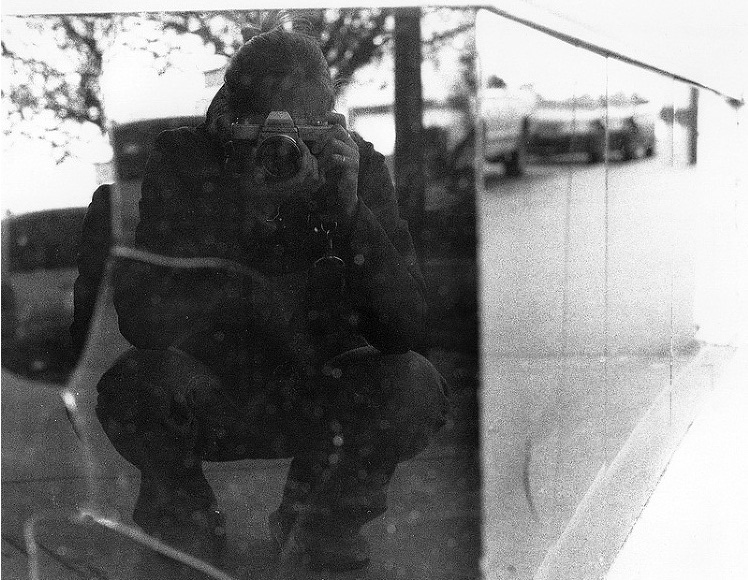
High School Self-Portrait, Minolta SR-T 101
When I first switched to a digital camera I wondered why I wasn’t as excited about the images I created as I had been with my film cameras. At first I couldn’t put my finger on what exactly was missing, but I soon realized it wasn't only that the images seemed flat, absent of the curious dimension and character that film images possess, but there was something missing about the process of creating the images themselves. I was no longer giving special care and attention to each individual composition—adjusting, focusing, treating each frame like a work of art. I was freely snapping images on a whim, taking the artistry out of the whole process. Film brings me back to the fine art of photography—composing with light and time on a canvas of emulsion and silver halide. Beyond the composition process is the physical experience of shooting a vintage film camera. I could shoot an entire roll of film simply composing frames of a dirty sock with my Bronica GS-1, advancing each frame with the manual film crank before pressing the shutter with it's glorious and satisfying clank, and it'd be a great day.
This is, of course, not to say that I am against digital photography. I primarily used digital equipment for years for all of my professional work because of the convenience and economical advantages—and honestly, for the comfort of seeing the image and instantly knowing whether I got that important shot. Digital photography spoils us in that way. But whenever I get the chance to pull out my old ’73 Minolta that started it all for me, it feels like reconnecting with an old friend. My digital gear has never stirred quite the same sentiments.